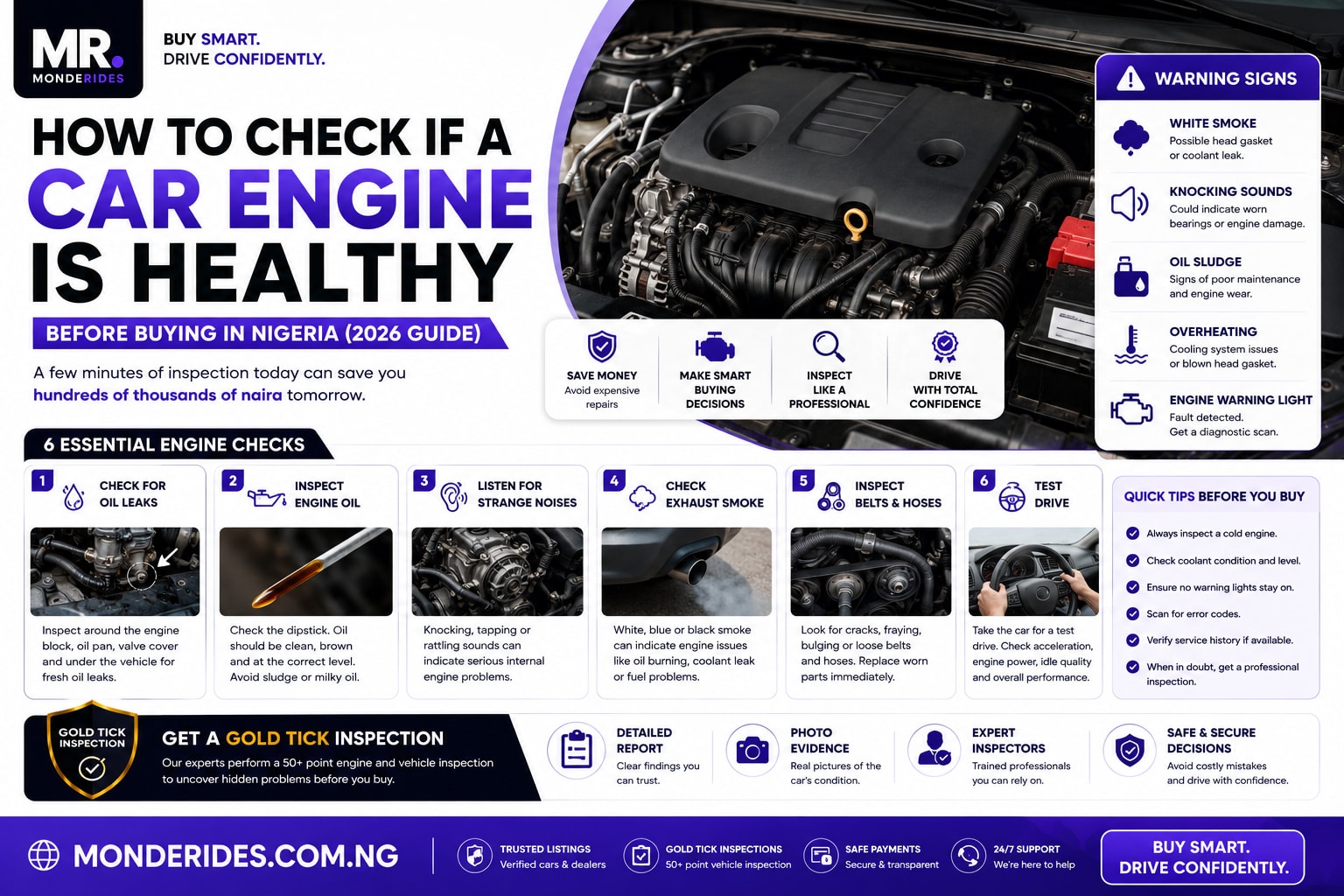
How to Check if a Car Engine Is Healthy Before Buying in Nigeria (2026 Guide)
The engine is the heart of every vehicle.
A car with a healthy engine can serve you reliably for years, while one with hidden engine problems can quickly turn into a financial nightmare.
Unfortunately, many used cars in Nigeria look perfect on the outside but hide expensive engine issues underneath the bonnet. Some sellers clean the engine thoroughly, warm it up before you arrive, or temporarily hide warning signs to make the vehicle appear healthier than it really is.
The good news is that you don't have to be a mechanic to spot many of these problems.
This guide explains how to inspect a used car engine before buying, the warning signs to look out for, and when it's worth paying for a professional inspection.
Why Engine Condition Matters
Replacing or rebuilding an engine is one of the most expensive repairs a car owner can face.
A neglected engine can lead to:
- Complete engine failure
- Poor fuel economy
- Frequent overheating
- Reduced performance
- Excessive oil consumption
- Costly repairs worth hundreds of thousands—or even millions—of naira
That's why inspecting the engine should be one of your highest priorities before buying any used vehicle.
1. Inspect the Engine Before It's Started
Always ask the seller not to start the car before you arrive.
A cold engine reveals problems that a warm engine may hide.
Before starting the car:
- Open the bonnet.
- Look for fresh oil leaks.
- Check for coolant leaks.
- Inspect belts and hoses.
- Look for broken clips or missing bolts.
- Examine the wiring.
A clean engine isn't always a good sign.
Some sellers wash the engine to hide leaks.
2. Check the Engine Oil
Engine oil tells a story about how well a car has been maintained.
Remove the dipstick and inspect the oil.
Healthy Oil
- Light brown to dark amber
- Smooth texture
- Correct oil level
Warning Signs
- Thick black sludge
- Milky or creamy oil
- Metallic particles
- Extremely low oil level
- Burnt smell
Milky oil may indicate coolant mixing with engine oil, often caused by a blown head gasket.
Metal flakes can indicate serious internal engine wear.
3. Remove the Oil Filler Cap
Unscrew the oil filler cap and look inside.
A healthy engine should appear clean with a thin coating of oil.
Avoid engines with:
- Thick sludge
- Heavy deposits
- Milky residue
- Rust
These signs usually point to poor maintenance or internal engine problems.
4. Look for Oil Leaks
Inspect around:
- Valve cover gasket
- Oil pan
- Timing cover
- Around the engine block
- Under the vehicle
Small oil stains may not be serious, but fresh, wet leaks deserve further investigation.
5. Check the Coolant
Never remove the radiator cap while the engine is hot.
Inspect the coolant reservoir instead.
Healthy coolant should be:
- Green
- Pink
- Orange
- Blue
Depending on the coolant type.
Avoid:
- Brown coolant
- Rusty coolant
- Oily coolant
- Empty reservoir
Poor coolant condition may indicate neglect or cooling system problems.
6. Listen Carefully When the Engine Starts
A healthy engine should start quickly and idle smoothly.
Listen for:
✅ Smooth idle
✅ Consistent RPM
✅ No unusual vibration
Avoid engines that produce:
- Knocking
- Tapping
- Grinding
- Rattling
- Loud ticking
These noises can indicate worn bearings, timing chain issues, valve problems, or internal engine damage.
7. Watch the Exhaust Smoke
Exhaust smoke can reveal hidden engine issues.
White Smoke
A small amount during a cold morning is normal.
Continuous thick white smoke may indicate coolant entering the combustion chamber.
Blue Smoke
Blue smoke means the engine is burning oil.
Possible causes include:
- Worn piston rings
- Valve seals
- Turbocharger issues
Black Smoke
Black smoke usually indicates excessive fuel consumption or injector problems.
A healthy engine should produce little to no visible smoke once warmed up.
8. Check for Excessive Engine Vibrations
Place your hand lightly on the engine while it is idling.
Minor vibration is normal.
Excessive shaking may indicate:
- Bad engine mounts
- Misfiring cylinders
- Ignition problems
- Fuel system issues
The steering wheel and dashboard should also remain relatively smooth while idling.
9. Inspect the Belts and Hoses
Rubber components wear out over time.
Check for:
- Cracks
- Fraying
- Loose belts
- Bulging hoses
- Coolant leaks around hose connections
Replacing belts is inexpensive.
Ignoring a failed timing belt can destroy an engine.
10. Check for Warning Lights
Before starting the engine:
Turn the ignition to the ON position.
Ensure all dashboard warning lights illuminate briefly.
After the engine starts:
The following lights should go off:
- Check Engine
- Oil Pressure
- Battery
- Coolant Temperature
If the Check Engine light remains on, request a diagnostic scan before buying.
11. Rev the Engine Gently
Allow the engine to warm up.
Then gently increase the RPM.
The engine should respond smoothly without hesitation.
Watch for:
- Smoke
- Strange noises
- Rough running
- Delayed throttle response
Avoid aggressive revving on a cold engine.
12. Inspect Under the Car
Look beneath the vehicle.
Signs of concern include:
- Fresh oil
- Coolant puddles
- Transmission fluid
- Fuel leaks
Even a small leak can become a costly repair later.
13. Take the Car for a Test Drive
A test drive reveals problems that cannot be seen while parked.
During the drive, pay attention to:
- Acceleration
- Engine power
- Gear changes
- Engine temperature
- Idle quality
- Strange noises
- Vibrations
Drive in both city traffic and at higher speeds if possible.
Common Engine Warning Signs
Be cautious if you notice any of the following:
- Engine knocking
- Blue exhaust smoke
- White exhaust smoke
- Oil leaks
- Coolant leaks
- Rough idle
- Engine overheating
- Burning oil smell
- Poor acceleration
- Engine warning light
- Low oil pressure
- Excessive vibration
One issue may not be a deal-breaker, but multiple warning signs should raise serious concerns.
Questions to Ask the Seller
Before making a decision, ask:
- Has the engine ever been rebuilt?
- Has it ever overheated?
- How often was the oil changed?
- Which oil was used?
- Has the timing belt been replaced?
- Has the head gasket ever been changed?
- Are service records available?
Honest answers can help you understand how the vehicle has been maintained.
Why a Professional Inspection Is Worth It
Many engine problems cannot be detected through a visual inspection alone.
Professional inspectors use specialised equipment to identify:
- Engine compression issues
- Cooling system faults
- Oil leaks
- ECU fault codes
- Hidden accident repairs
- Fluid contamination
- Engine performance problems
A professional inspection often costs far less than repairing a damaged engine after purchase.
Frequently Asked Questions
Can I inspect a car engine without being a mechanic?
Yes.
Many basic checks—such as inspecting the oil, coolant, exhaust smoke, and listening for unusual noises—can be performed by any buyer.
Is a clean engine always a good sign?
Not necessarily.
Some sellers clean the engine to hide leaks or recent repairs.
Always inspect carefully rather than judging by appearance alone.
Should I buy a car with the Check Engine light on?
Not without first identifying the exact cause.
Some issues are minor, while others require major engine repairs.
Always perform a diagnostic scan before making payment.
Final Verdict
A healthy engine is one of the most important factors when buying a used car.
Taking a few extra minutes to inspect the engine can save you from expensive repairs and unnecessary stress later.
Check the oil, inspect for leaks, listen carefully during startup, monitor the exhaust smoke, and always take the car for a proper test drive.
If you're unsure about the engine's condition, don't rely on guesswork.
A professional inspection provides the confidence you need to make an informed decision.
Buy with Confidence on MondeRides
At MondeRides, we help buyers make smarter decisions with trusted listings and Gold Tick Vehicle Inspections.
Our certified inspectors examine critical engine components, identify hidden faults, and provide a comprehensive report before you buy.
Browse trusted vehicles, book an inspection, and drive away with confidence.
MondeRides — Buy Smart. Drive Confidently.
🎯 Key Takeaways
Buying a used car? Learn how to inspect a car engine like a professional. Discover the warning signs of engine problems, what to check before buying, and how to avoid costly repairs in Nigeria.