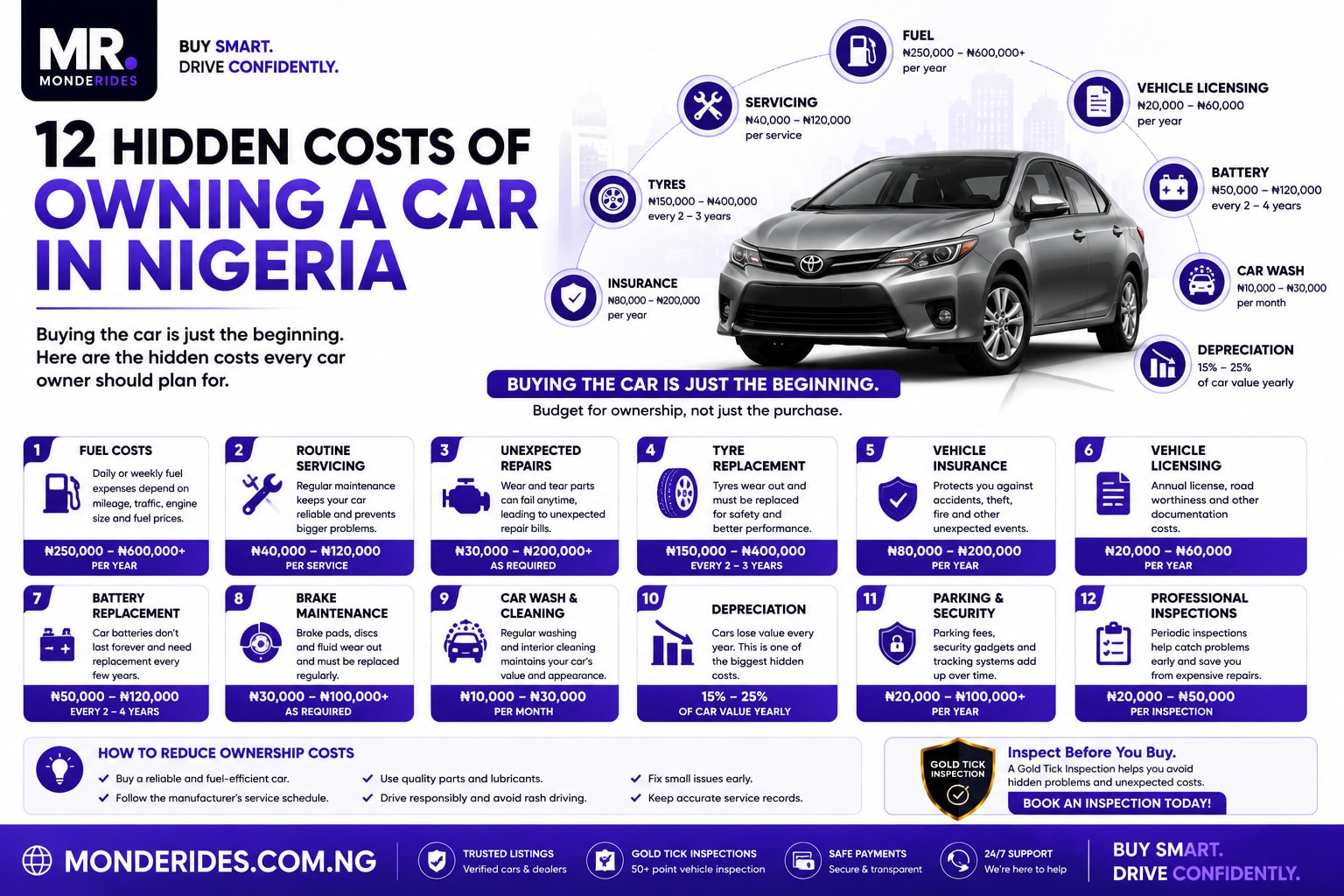
12 Hidden Costs of Owning a Car in Nigeria Nobody Warns You About (2026 Guide)
Buying a car is a major milestone, but many Nigerians focus only on the purchase price and forget about the ongoing costs of ownership.
A car that seems affordable today can become expensive to maintain if you don't plan for fuel, servicing, insurance, tyres, licensing, and unexpected repairs.
Whether you're buying your first car or upgrading to a newer model, understanding these hidden costs will help you budget better and avoid financial surprises.
Here's what every car owner in Nigeria should know.
1. Fuel Costs
Fuel is the most obvious expense, but many buyers underestimate how much they'll spend over a year.
Fuel costs depend on:
- Your daily mileage
- Traffic conditions
- Engine size
- Driving habits
- Fuel prices
For example, a fuel-efficient Toyota Corolla will generally cost far less to run than a larger SUV with a V6 engine.
Tip: Compare fuel economy before buying, not after.
2. Routine Servicing
Every vehicle requires regular servicing to remain reliable.
Typical maintenance includes:
- Engine oil
- Oil filter
- Air filter
- Fuel filter
- Spark plugs
- Brake fluid
- Coolant
- Transmission fluid
Skipping routine servicing may save money today but often leads to much larger repair bills later.
3. Unexpected Repairs
No matter how reliable a car is, parts eventually wear out.
Common repairs include:
- Suspension components
- Wheel bearings
- Engine sensors
- Alternator
- Starter motor
- Water pump
- Air conditioning repairs
Buying a poorly maintained used car increases the likelihood of these expenses.
4. Tyre Replacement
Tyres don't last forever.
Most quality tyres need replacement every few years, depending on:
- Road conditions
- Driving style
- Mileage
Driving on worn tyres reduces braking performance and increases the risk of accidents, especially during the rainy season.
Always budget for tyre replacement.
5. Vehicle Insurance
Insurance isn't just a legal requirement—it protects you financially.
Depending on your policy, insurance can cover:
- Theft
- Fire
- Accidents
- Third-party damage
- Flood damage
While comprehensive insurance costs more than third-party coverage, it can save you significant money after a major incident.
6. Vehicle Licensing and Documentation
Every year, you'll need to renew certain documents.
These may include:
- Vehicle licence
- Road worthiness certificate
- Third-party insurance
- Number plate documentation (where applicable)
Failing to renew these documents can result in fines or vehicle impoundment.
7. Battery Replacement
A typical car battery lasts between two and four years, depending on usage and climate.
Warning signs include:
- Slow engine cranking
- Dim headlights
- Dashboard battery warning light
Battery failure usually happens without much warning, so it's wise to budget for replacement.
8. Brake Maintenance
Your braking system is one of the most important safety components of any vehicle.
Brake maintenance may involve replacing:
- Brake pads
- Brake discs
- Brake fluid
- Brake shoes
Ignoring worn brakes can compromise your safety and increase repair costs.
9. Car Wash and Cleaning
Keeping your vehicle clean isn't just about appearance.
Regular washing helps protect:
- Paintwork
- Undercarriage
- Interior surfaces
Professional detailing also helps maintain resale value.
While each wash may seem inexpensive, the cost adds up over time.
10. Depreciation
Many people forget that cars lose value every year.
Depreciation is often the biggest hidden cost of ownership.
Factors affecting resale value include:
- Vehicle brand
- Mileage
- Service history
- Accident history
- Market demand
Popular models like the Toyota Corolla and Honda Accord generally retain their value better than less common vehicles.
11. Parking and Security
Depending on where you live or work, parking may become a recurring expense.
Some owners also invest in:
- Steering locks
- GPS trackers
- Alarm systems
- Secure parking facilities
These costs improve security but should be included in your ownership budget.
12. Professional Vehicle Inspections
Many owners only think about inspections when buying a car.
However, periodic inspections help identify problems before they become expensive repairs.
A professional inspection can detect:
- Suspension wear
- Oil leaks
- Cooling system issues
- Brake problems
- Electrical faults
- Engine concerns
Early detection often saves thousands of naira in future repairs.
Estimated Annual Ownership Costs
While costs vary depending on the vehicle, owners should budget for:
| Expense | Frequency | |---------|-----------| | Fuel | Weekly | | Servicing | Every 5,000–10,000 km | | Tyres | Every few years | | Insurance | Yearly | | Licensing | Yearly | | Battery | Every 2–4 years | | Brake Maintenance | As required | | Repairs | Unexpected | | Car Wash | Weekly or Monthly | | Vehicle Inspection | Before purchase and periodically |
How to Reduce Ownership Costs
You can't eliminate every expense, but you can reduce them by:
- Buying a reliable model.
- Following the manufacturer's service schedule.
- Using quality replacement parts.
- Driving responsibly.
- Checking tyre pressure regularly.
- Fixing small problems early.
- Keeping accurate service records.
Preventive maintenance is almost always cheaper than emergency repairs.
Frequently Asked Questions
Which car is cheapest to own in Nigeria?
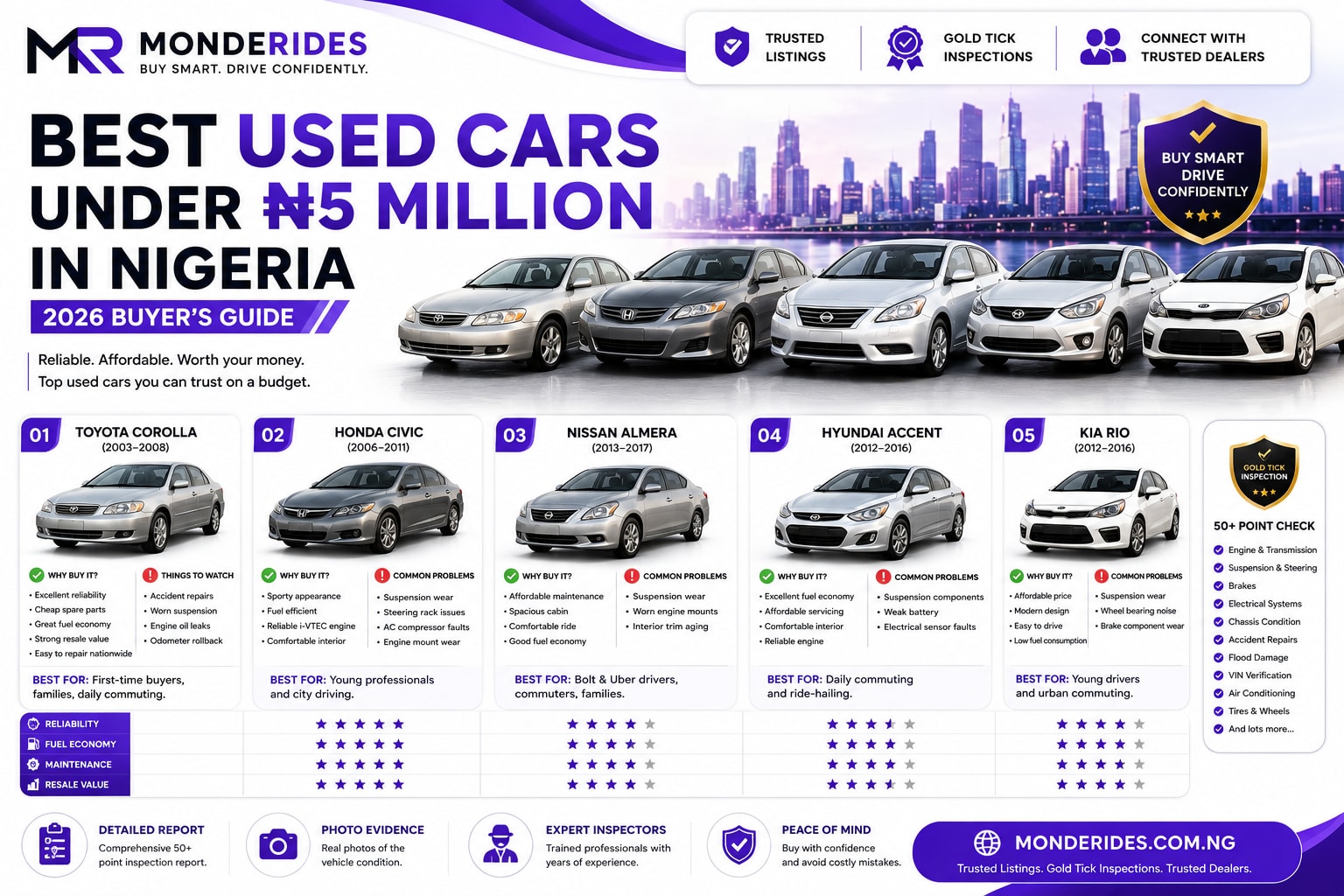
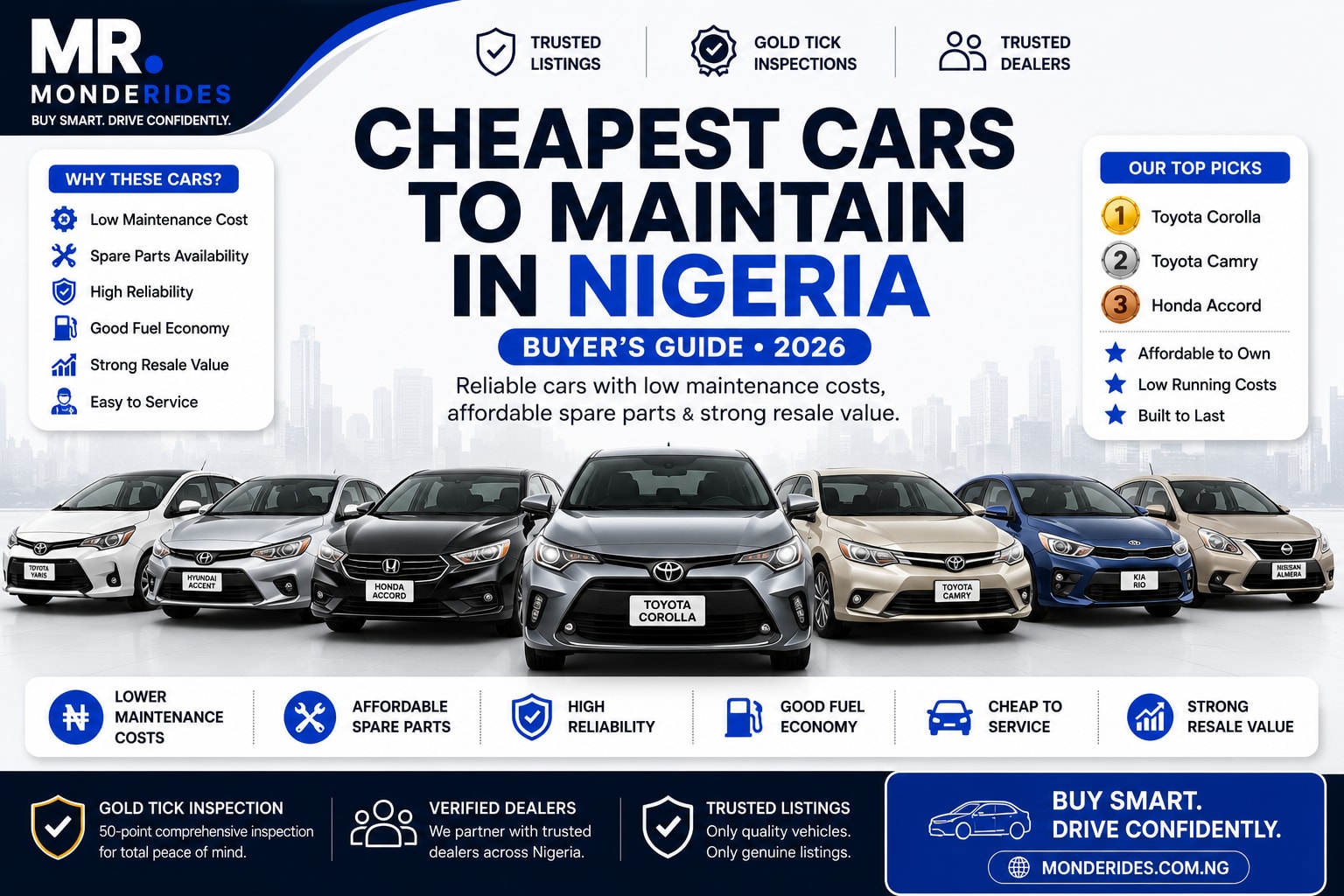
Reliable, fuel-efficient models such as the Toyota Corolla, Honda Civic, and Toyota Yaris are generally among the most affordable to own due to lower maintenance costs and readily available spare parts.
Is buying a used car cheaper than buying a new one?
The purchase price is usually lower, but a poorly maintained used car can quickly become expensive if it requires major repairs.
A professional inspection before purchase helps reduce this risk.
How can I avoid unexpected repair costs?
- Buy from trusted sellers.
- Verify the vehicle's history.
- Inspect the car thoroughly.
- Follow a regular maintenance schedule.
- Address small issues before they become major problems.
Final Verdict
Owning a car involves much more than making the initial purchase.
Fuel, servicing, insurance, tyres, licensing, repairs, and depreciation all contribute to the true cost of ownership.
Understanding these expenses before you buy allows you to choose a vehicle that fits not only your budget today but also your financial capacity in the years ahead.
The smartest car owners plan for ownership—not just the purchase.
Buy Smart with MondeRides
At MondeRides, we're committed to helping Nigerians make informed automotive decisions.
Browse trusted vehicle listings, compare prices, connect with verified dealers, and book a Gold Tick Vehicle Inspection before you buy.
Knowing the true condition of a vehicle today can save you significant money tomorrow.
MondeRides — Buy Smart. Drive Confidently.
🎯 Key Takeaways
Buying a car is only the beginning. Discover the hidden costs of owning a car in Nigeria, from fuel and maintenance to insurance, licensing, depreciation, and unexpected repairs.